
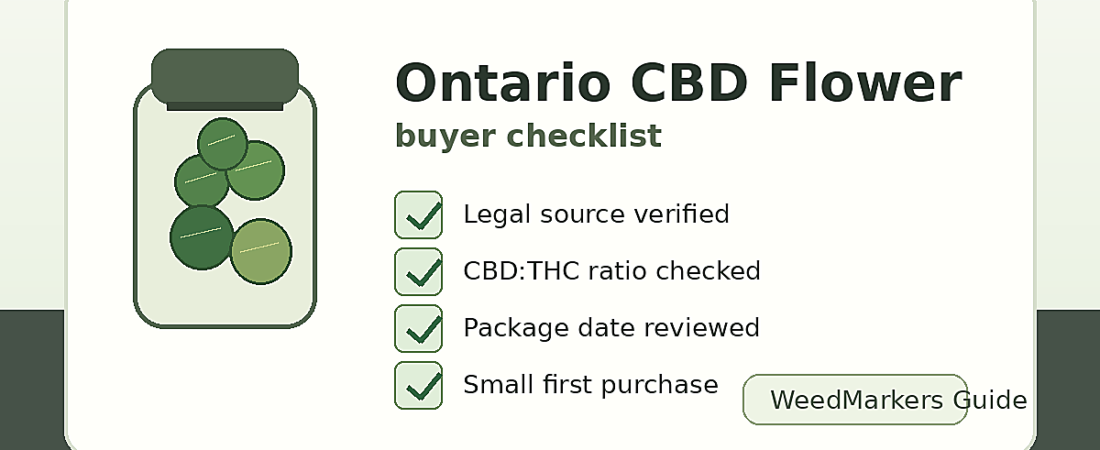
CBD flower can look deceptively simple on an Ontario cannabis menu. It is still dried cannabis, still comes with terpene and freshness tradeoffs, and still needs the same legal-source checks as any THC-dominant flower. The difference is the buying goal: instead of chasing the strongest high, most shoppers are trying to find a gentler smoke, a balanced daytime option, or a way to enjoy aroma and ritual without leaning hard into intoxication.
This guide walks through how to compare CBD flower in Ontario before you buy: legal source checks, CBD-to-THC ratios, freshness clues, package size, terpene notes, smoke expectations, storage, and when another format may fit better.
Start With the Legal Source
In Ontario, the first filter is not strain name or percentage. It is whether the product is coming through a legal cannabis channel. Legal stores and authorized online paths have packaging, age-gate, product-label, and purchase-limit rules that give you more information than an anonymous menu listing. Before comparing CBD flower, confirm the retailer is operating inside Ontario’s legal framework and that the package information is specific enough to make a decision.
The Alcohol and Gaming Commission of Ontario maintains cannabis retail oversight, Ontario publishes provincial cannabis rules through its public information pages, and the federal Cannabis Act sets the national legal framework. Those sources are a better starting point than guessing from social posts, stale directory pages, or a product photo with no lot information.
If you want a broader legal-listings comparison layer before choosing one CBD flower product or retailer path, CannaRadar can help you see how cannabis listings are presented across Ontario and Canadian markets. Use that kind of comparison to organize your shortlist, then verify the actual product details with the legal retailer before you buy.
CBD Flower Is Not Automatically Non-Intoxicating
A common beginner mistake is assuming CBD flower means zero impairment. Many CBD-rich flower products contain some THC, and even a low THC percentage can matter if you are sensitive, new, combining formats, or using more than one session in a day. The useful question is not simply “Is this CBD?” It is “How much CBD, how much THC, and what is the ratio?”
| Menu signal | What it usually means | Buyer check |
|---|---|---|
| CBD-dominant flower | CBD is higher than THC | Still check THC percentage and package size |
| Balanced flower | CBD and THC are closer together | Expect more noticeable intoxication than CBD-dominant products |
| Low-THC flower | THC is limited, but not always absent | Confirm the exact THC range on the current package |
| High-terpene CBD flower | Aroma may be a bigger selling point than potency | Check package date, dominant terpenes, and freshness clues |
If you are brand new, treat CBD flower the same way you would treat any inhaled cannabis format: start with a small amount, wait, and do not stack it with edibles, drinks, or strong THC products just because the label looks mild. For a wider beginner explanation, see the WeedMarkers guide to THC vs CBD for beginners in Canada.
Check Freshness Before You Compare Price
CBD flower can disappoint when it is too dry, too old, or poorly described. Because many shoppers are buying it for a smoother routine rather than maximum potency, harshness and stale aroma matter. A cheaper jar is not really cheaper if it burns hot, smells flat, or forces you to use more than planned to get the experience you wanted.
Look for a clear package date, lot information, product weight, cannabinoid range, terpene notes, and storage condition. If the menu only shows a strain name and one percentage, you do not have enough context. The same freshness discipline from the Ontario dried flower buying guide applies here, even when CBD is the main cannabinoid.
Use Package Size to Control Risk
CBD flower is often something people test for routine fit. That makes package size important. A small package lets you judge aroma, grind, harshness, and personal response before committing to more. Larger sizes only make sense when you already know the product stays fresh in your storage setup and fits your actual usage pace.
| Buyer situation | Safer first choice | Why it helps |
|---|---|---|
| First CBD flower purchase | Smallest practical package | Limits waste if the aroma, burn, or THC level is not right |
| THC-sensitive shopper | CBD-dominant, low-THC product | Reduces the chance of an unexpectedly strong session |
| Using for evening routine | Compare terpene notes and package date | Freshness and aroma may matter more than headline CBD percentage |
| Already has a favourite | Re-buy only if current lot details still match | Flower can vary by lot, package age, and storage |
Compare CBD Flower Against Oils, Capsules, and Vapes
CBD flower is inhaled, so onset is usually faster than swallowed formats. That can be useful when someone wants a quick read on how a small amount feels. The tradeoff is smoke or vapour exposure, shorter duration, more smell, and less precise dose control than a measured oil or capsule.
If your priority is repeatable milligram dosing, CBD oil or capsules may be cleaner than flower. If your priority is aroma, quick onset, and the familiar ritual of dried cannabis, flower may be the better fit. The key is matching the format to the job rather than assuming CBD flower is automatically the safest or most practical CBD option. For format comparison, use the WeedMarkers guides to cannabis oils in Ontario and cannabis capsules and softgels in Ontario.
Read Terpene Notes Without Overpromising Effects
Terpenes can help you compare aroma and freshness, but they should not be treated like guaranteed medical outcomes. A menu may describe citrus, pine, pepper, floral, or earthy notes. Those clues can help you pick a product you are more likely to enjoy, especially when CBD and THC percentages are similar between two options. They cannot guarantee sleep, anxiety relief, pain relief, or a specific mood.
For practical shopping, use terpene notes as a tie-breaker after legal source, cannabinoid ratio, package date, and product size. If the label offers no terpene information at all, that is not always a deal-breaker, but it does make aroma and freshness harder to judge before purchase.
Storage Matters More Than People Think
CBD flower can lose appeal quickly if it is left in heat, light, or dry air. Keep it in its original packaging or a clean airtight container, away from direct sun and high humidity. Do not store cannabis beside food, pet products, or anything accessible to children. If the flower becomes crumbly, dusty, or noticeably flat, it may still be cannabis, but it is no longer the same buying experience you paid for.
The goal is not to create a complicated storage ritual. It is to preserve aroma and texture long enough to use the product as intended. For a deeper storage walkthrough, read how to store cannabis at home in Canada.
Red Flags Before Checkout
- No package date, lot detail, or current cannabinoid range.
- CBD claims that sound medical, guaranteed, or too precise for a retail product page.
- Only a strain name and a photo, with no product-weight or freshness context.
- A “CBD” label paired with a THC level that is too high for your tolerance.
- Pressure to buy a large size before you have tested the product.
- No clear legal-source path, age-gate, or Ontario retail verification.
Bottom Line
The best CBD flower purchase in Ontario is not just the jar with the highest CBD percentage. It is the product that comes from a legal source, shows a clear CBD-to-THC ratio, gives enough freshness detail to trust the flower, fits your package-size risk, and matches the way you actually plan to use it. If those basics are missing, keep comparing before you buy.