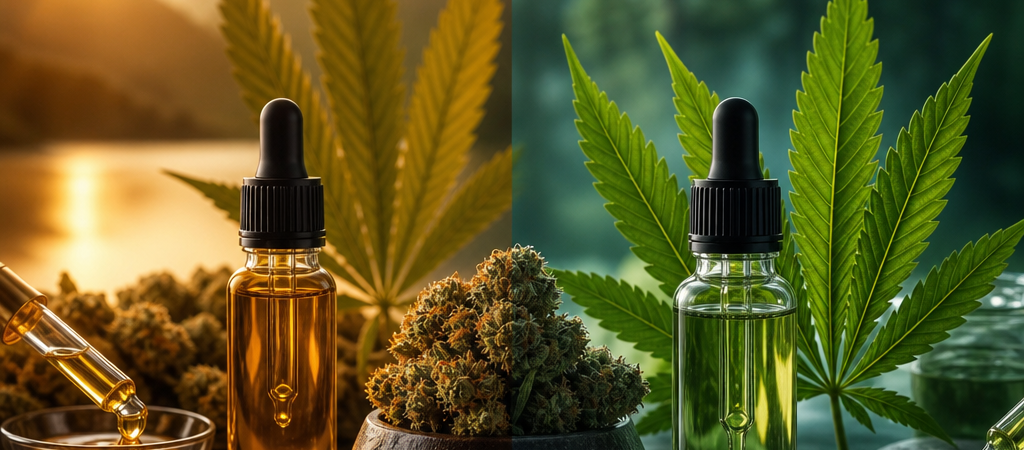
If you are new to cannabis in Canada, one of the first confusing decisions is whether you should start with THC, CBD, or a product that combines both. A lot of beginner advice online makes this sound simpler than it really is. THC and CBD both come from cannabis, but they do not feel the same, they do not fit the same goals, and they are not equally beginner-friendly in every situation.
THC is the cannabinoid most people associate with getting high. CBD is usually chosen for a milder, non-intoxicating or lower-intensity experience. Neither is automatically “better.” The right choice depends on what you want, how cautious you need to be, what time of day you plan to use it, and how comfortable you are with psychoactive effects.
This guide breaks down the real difference between THC and CBD, which one tends to make more sense for total beginners, how to avoid a bad first experience, and what Canadian consumers should check before they buy.
What THC Actually Does
THC, short for tetrahydrocannabinol, is the main psychoactive cannabinoid in cannabis. It is the part most likely to create euphoria, altered perception, stronger sensory awareness, appetite changes, time distortion, and the classic “high” feeling. Depending on the dose, product format, and your own tolerance, THC can feel relaxing, giggly, dreamy, social, sleepy, mentally active, or simply overwhelming.
For beginners, the biggest thing to understand is that THC is not one single experience. A low-dose THC edible can feel very different from a strong flower session. A balanced hybrid can feel different from a punchy sativa-leaning strain. And inhaled THC usually arrives faster than ingested THC, which matters a lot when you are judging whether you have already had enough.
If you still need the broader legal and practical foundation, start with our Cannabis 101 guide for beginners in Canada before you buy anything strong.
What CBD Actually Does
CBD, or cannabidiol, does not usually create the same intoxicating high as THC. Many beginners are drawn to CBD because it feels more approachable, especially if they are curious about cannabis but nervous about feeling too altered or out of control. People often explore CBD for calm, evening routines, low-key body comfort, or a gentler first step into cannabis products.
That does not mean CBD is magic, or that it feels dramatic for everyone. Some consumers notice a subtle easing-off effect rather than a big wave of sensation. Others appreciate it mostly because it lets them explore cannabis-adjacent products without the stronger psychoactive edge of THC.
If your main goal is to stay clear-headed while testing the waters, our guide to CBD for beginners in Canada goes deeper into oils, capsules, gummies, and how to think about low-risk first purchases.
THC vs CBD: The Simplest Beginner Difference
- THC: psychoactive, more noticeable, more likely to feel recreational or mentally shifting
- CBD: usually non-intoxicating, subtler, often chosen by people who want less disruption to their headspace
- THC + CBD together: can sometimes feel more balanced, depending on the ratio and dose
For many first-timers, the question is not “Which cannabinoid is stronger?” but “How much uncertainty am I comfortable with?” THC tends to create more immediate feedback, but it also carries more risk of taking too much. CBD tends to be easier emotionally for cautious beginners, but some people try it expecting a dramatic effect and then feel underwhelmed because they misunderstood what it is supposed to do.
When THC Makes More Sense for a Beginner
THC may still be the right starting point if you are specifically curious about the classic cannabis experience and you are willing to go slowly. Some beginners are not looking for a barely noticeable product. They want to understand why cannabis has such a strong cultural footprint, how inhaled flower feels, or what a low-dose edible is actually like.
THC can make sense when:
- you want a real psychoactive effect, not just a subtle support product
- you are comfortable starting very low and waiting properly
- you can use it in a calm setting without pressure
- you are not already highly sensitive to anxiety, overstimulation, or loss of control
If you go the THC route, the safest beginner mistake is taking too little. The riskiest one is assuming you feel nothing, then doubling the dose too fast.
When CBD Makes More Sense for a Beginner
CBD is often the better first step for people who are curious about cannabis but not especially interested in getting high. It is also a better fit for beginners who feel nervous about racing thoughts, who want to stay functional, or who are comparing cannabis to a simple evening-wind-down routine rather than a recreational session.
CBD may make more sense when:
- you want the gentlest entry point possible
- you need to avoid a strong psychoactive effect
- you are cautious by nature and want more control
- you are exploring oils, capsules, or low-drama wellness products first
It can also be a smart starting point if you plan to learn how your body responds before trying anything THC-forward later.
Should Beginners Start With THC, CBD, or a Balanced Product?
For a lot of Canadian beginners, the most realistic answer is: start with the outcome you actually want.
- If you want to feel high, start with a very low-dose THC product.
- If you do not want to feel high, start with CBD.
- If you want a middle ground, look at low-dose balanced products where CBD helps soften the experience.
Balanced products can be useful because they reduce the “all or nothing” feeling many beginners worry about. They are not automatically mild, but they are often easier to approach than jumping straight into high-THC flower or a stronger edible.
If you want to see how that middle-ground idea plays out on a real Ontario edible menu, our balanced THC:CBD edibles in Ontario guide walks through ratio patterns, clean dose math, and the kinds of beginner-friendly questions worth asking before you buy.
If your middle-ground plan is specifically an edible, choose the format with the clearest serving math before you chase a “fast” label. Ontario drinks and other rapid formats can be useful for some beginners, but faster onset still does not erase the wait window or the need for a measured first dose. Our fast-acting edibles in Ontario guide breaks down where drinks, rapid gels, and other quicker-feeling formats can fit without turning a cautious first night into sloppy re-dosing.
Beginner Format Matters Just as Much as the Cannabinoid
People often obsess over THC versus CBD while ignoring the product format, even though format can shape the experience just as much.
Flower
Flower hits faster, which makes it easier to judge in real time, but the inhalation experience is not ideal for everyone. Many first-timers prefer a dry herb vape or a small, cautious smoke session instead of a stronger edible.
If that first flower purchase is meant to stay gentler and more CBD-forward, use our Ontario CBD flower buying guide to compare ratios, freshness, and package size before assuming a CBD label means zero impairment.
Edibles
Edibles are popular because they feel approachable, but they are where beginners often make the worst mistakes. THC edibles take longer to kick in and can last much longer. That delay causes people to re-dose too soon.
Oils and Capsules
These are often the cleanest starting point for CBD beginners and a more measured option for low-dose THC exploration because the dosing can be easier to repeat consistently.
If sleep is one of your goals, our practical guide to cannabis for sleep explains why the best product choice is not always the strongest THC option on the shelf.
THC vs CBD Beginner Quick-Check
- Choose THC first if: you want a real high, can start low, and can use it somewhere calm
- Choose CBD first if: you want the gentlest possible introduction and would rather stay clear-headed
- Choose balanced THC/CBD if: you want a softer middle-ground entry point
- Most important rule: do not let packaging, flavour, or branding talk you into a stronger starting point than your comfort level supports
If you want a low-dose edible first, pick by serving clarity not hype
For cautious beginners, an edible can still make sense if the label is easy to read and the serving size is easy to respect. The real question is not whether gummies, chocolates, or drinks are the “best” category in the abstract. It is whether the product gives you a repeatable dose without tempting you to freestyle the serving.
- Gummies: often easiest when each piece is clearly dosed and individually countable
- Chocolates: workable if the square or segment is precise, but sloppy bite-sizing is how people lose track
- Drinks: simple for some beginners, but only if the container and serving guidance make it obvious how much THC is in the amount you plan to drink
If you are buying in Ontario, pair our Ontario edibles dosage guide with the newer gummies vs chocolates vs drinks beginner guide before you choose your first format. That combination gives you both the dose math and the format tradeoffs, which is a much safer beginner path than picking the product with the nicest packaging.
How to Avoid a Bad First Experience
No matter which path you choose, a good first session usually comes down to pacing and context more than hype.
- start with a small dose
- avoid mixing with alcohol
- do not test a new product right before a demanding social event
- eat, hydrate, and give yourself time
- buy from legal Canadian sources with clear packaging and cannabinoid information
If you are shopping for your very first product, our guide on how to buy weed legally in Canada and our checklist for choosing a cannabis store in Ontario can help you avoid low-trust listings, confusing menus, and bad beginner purchases.
How to use a cannabis menu once you know your THC/CBD goal
Once you know whether you want a clearer CBD-first experience, a real THC high, or a balanced middle ground, the next beginner challenge is reading the menu without getting distracted by flashy product names or giant potency numbers. This is where a lot of first-time buyers drift away from their actual goal and end up with a product that is stronger, less predictable, or simply less useful than what they meant to buy.
Before you add anything to your cart, compare the cannabinoid ratio, serving format, per-dose clarity, and freshness cues the same way we break them down in our guide on how to read a cannabis menu before you buy in Canada. It is one of the easiest ways to turn “THC or CBD?” from an abstract question into a smarter product choice.
What Canadian Buyers Should Check on the Label
Before buying either THC or CBD, check:
- the THC and CBD amounts clearly listed on the package
- the product format and serving guidance
- packaging date and freshness where relevant
- licensed producer and legal regulatory labeling
- whether the product is designed for inhalation, ingestion, or sublingual use
Do not buy based only on the biggest number. A beginner-friendly product is the one you can understand, dose carefully, and repeat predictably if it works for you.
For official consumer information, review Health Canada’s cannabis guidance and your province’s legal retail resources where relevant.
Final Verdict: Which Should You Try First?
If you are cautious, sensitive, or mostly curious about the gentler side of cannabis, CBD is usually the safer first move. If you are specifically trying to experience cannabis in the classic sense, THC can still be a good starting point as long as the dose is truly low and the setting is relaxed.
For many beginners, the smartest answer is not ideological. It is practical: choose the product that matches your goal, your risk tolerance, and your willingness to go slow. Cannabis gets easier to understand once you stop asking which option is “best” in the abstract and start asking which one actually fits the experience you want.
If your first product will be an edible, timing matters before THC vs CBD
A lot of beginners get stuck on the cannabinoid question and miss the format question. If your first purchase will be an edible, the biggest risk is often not whether you picked THC, CBD, or a balanced ratio. It is whether you respected the delayed onset. A low-dose edible that gets re-dosed too early becomes a worse experience than a slightly imperfect cannabinoid choice that was timed properly.
- THC-only edible: keep the starting dose especially low and assume the full effect may take up to 2 hours to show itself.
- Balanced THC/CBD edible: often easier for cautious beginners, but it still follows the same delayed onset rules.
- CBD-forward gummy or capsule: usually feels subtler, but you still want a repeatable dose and realistic expectations instead of chasing a dramatic effect.
- Most important beginner rule: do not judge an edible at the 20-minute mark.
Before you buy your first edible, read our breakdown of how long weed edibles take to kick in so you know the real onset, peak, and duration windows. If your goal is specifically better sleep rather than a general first experience, our cannabis for sleep guide explains why the best nighttime product is not always the strongest THC option on the shelf.
FAQ: THC vs CBD for Beginners
Will CBD get me high?
CBD does not usually create the same intoxicating high associated with THC. Most people choose it because it feels subtler and easier to approach.
Is THC bad for beginners?
Not automatically, but it is easier to overdo. Beginners who try THC should start low, go slowly, and avoid re-dosing too fast.
Is a balanced THC/CBD product better for first-timers?
It often can be, especially for people who want a softer middle ground instead of jumping straight into stronger THC products.
Should I start with an edible or flower?
Many beginners think edibles are easier, but they are often harder to judge because they take longer to kick in. A carefully dosed oil, capsule, or very low-dose edible is usually easier to manage than taking random extra servings.
Related beginner cannabis guides
- How to Read a Cannabis Menu Before You Buy in Canada
- How Long Do Weed Edibles Take to Kick In? Onset, Peak & Duration in Canada (2026)
- Ontario Edibles Dosage Guide: How Much THC to Start With (Beginner-Friendly)
- Fast-Acting Edibles in Ontario (2026): Drinks, Rapid Formats & Safer Dose Math
- Balanced THC:CBD Edibles in Ontario (2026): Ratios, Dose Math & First-Time Tips
- Ontario Edibles Formats: Gummies vs Chocolates vs Drinks (Beginner Guide)
- CBD for Beginners in Canada: Benefits, Dosage, Safety & What to Buy
- How to Buy Weed Legally in Canada: Your Complete 2026 Guide