
Cold Canadian weather creates a practical cannabis-storage problem that is easy to miss: a product can be protected from summer heat and still be exposed to freezing temperatures, condensation, or repeated temperature swings on the way home. This guide helps adult consumers keep legally purchased cannabis in better condition through winter without turning a car, porch, or coat pocket into long-term storage.
The goal is not to make cannabis last indefinitely. It is to keep the original package intact, avoid unnecessary heat-and-cold cycling, and make a safer plan for getting products from the retailer to a stable storage spot at home.
Why winter storage deserves its own plan
Winter does not automatically ruin a sealed cannabis product. The bigger issue is change: a package left in a cold vehicle, carried through snow, then placed beside a radiator can collect moisture or change texture and aroma. Flower may become brittle, concentrates can be harder to handle, and a cartridge or battery can perform poorly when cold. Edibles and beverages have their own package and food-safety instructions, so the label remains the first source of truth.
Keep cannabis in its original child-resistant packaging until you are ready to use it. Original packaging preserves the product details, including the lot number, package date, cannabinoid information, warnings, and any storage instructions. Our guide to reading a Canadian cannabis label explains the fields worth checking before you put a product away.
The safest route home is the shortest stable one
Plan the purchase for the end of a trip when possible. Do not leave cannabis in a parked vehicle while you run other errands, especially overnight. A trunk, unheated garage, building vestibule, or apartment balcony is not a reliable storage location. They can get very cold and then warm up quickly, which is exactly the kind of repeated swing worth avoiding.
For a delivery, be ready for the handoff. Confirm your address, keep photo ID available if required, and bring the package indoors promptly. If an ETA changes or the handoff cannot happen safely, use the retailer’s official contact channel rather than accepting an improvised drop-off. The Ontario delivery-delay guide covers practical questions to ask when timing changes.
A simple winter storage setup at home
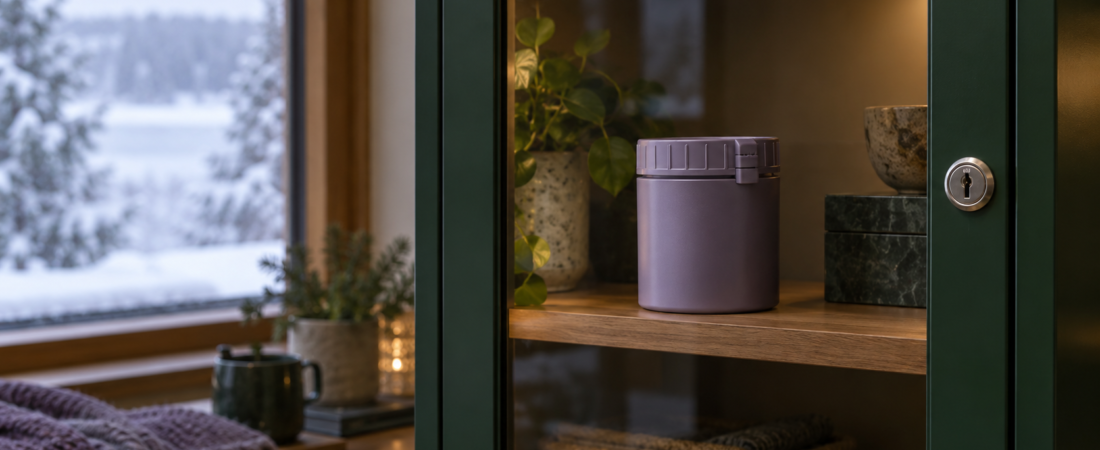
- Choose a cool, dry, dark interior cupboard or locked storage area away from radiators, ovens, windows, and exterior walls.
- Keep the product sealed in its original packaging and do not transfer it into food containers or unlabelled jars.
- Store cannabis separately from snacks, medications, pet treats, and children’s items.
- Use a high shelf or locked container where children, guests, and pets cannot access it.
- Bring products to room temperature gradually after a cold trip; do not force-warm them with a heater or hot water.
Storage is also a household-safety issue. If children are present or visit regularly, use the stronger safeguards in our cannabis and children at home guide. Pet owners should keep products secured and know what information to gather for a veterinary call; see the cannabis and pet safety guide.
Format-by-format cold-weather checks
| Format | Winter concern | Practical check |
|---|---|---|
| Dried flower | Cold, dry air and rough handling can make it brittle. | Keep it sealed; inspect the package and avoid opening it repeatedly in damp outdoor air. |
| Vape cartridges | Cold oil and batteries may feel sluggish. | Let the sealed device reach room temperature naturally before use; follow manufacturer instructions. |
| Concentrates | Texture can become difficult to portion after temperature changes. | Keep the container closed and avoid heating it directly. |
| Edibles and beverages | Ingredients and packaging can have specific storage limits. | Follow the label and keep products away from food that could cause mix-ups. |
Do not assume a strain name or a high THC number tells you how a cold-exposed product will behave. Check the actual package, and do not use a product if the seal is damaged, the label conflicts with the item, or you are unsure of its condition. For a broader product comparison routine, the guide to why THC percentage is not a quality score can help keep the focus on the information that matters.
Condensation: slow down instead of improvising
Condensation happens when a cold surface meets warmer, humid indoor air. A sealed package is less exposed than an opened one, which is another reason not to open products outside or in a vehicle. If the outside of a sealed container feels cold after travel, set it in a stable indoor spot and give it time to come to room temperature. Avoid placing it on a heater, near a fireplace, or in an appliance to speed things up.
If you notice unexpected moisture, a broken seal, visible mould, an unusual odour, or a product that cannot be identified from its original label, do not guess. Preserve the receipt and package, contact the legal retailer through its official support channel, and consult the Health Canada recalls and safety alerts database if you are concerned about a recall. Our Canadian cannabis recall guide explains what details to record.
Quick decision aid: when a cold package comes indoors
| What you notice | Safer next step |
|---|---|
| The sealed package is simply cold and intact | Place it in a stable indoor cupboard and let it return to room temperature naturally before opening. |
| Moisture is only on the outside of a sealed container | Dry the exterior, keep the package closed, and avoid direct heat or a rapid temperature change. |
| A seal is damaged, the label does not match, or the product seems unusual | Do not use it. Keep the package and receipt, then contact the legal retailer through its official support channel. |
Before a winter trip, adults comparing store and product listings can use CannaRadar as a discovery layer, then confirm the seller’s authorization, current inventory, pickup details, and final product information through the provincial regulator and the retailer’s official channel.
After a cold trip: use a no-rush reset
A cold package does not need a quick fix. The safer routine is to keep it closed, place it in a stable indoor storage spot, and let it warm gradually before you inspect or open it. That avoids adding another temperature swing just to make the product easier to handle.
| Tempting shortcut | Why to skip it | Safer reset |
|---|---|---|
| Putting a cold package on a radiator, heater, or sunny windowsill | Direct heat can create a rapid change and makes storage conditions harder to judge. | Keep it sealed in a cool, dry interior cupboard until it reaches a stable temperature naturally. |
| Opening the package immediately to check it | Warm indoor air can meet a cold product or container at the moment it is opened. | Wait until the sealed package no longer feels cold, then inspect the label and seal in good light. |
| Moving it to a freezer, garage, or balcony for “better” storage | Those locations can add more cold exposure and unpredictable temperature changes. | Use a locked or out-of-reach interior storage area away from food, pets, children, and heat sources. |
If the package is damaged, wet inside, or does not match its label after it has settled, do not try to dry, repair, or transfer the product. Keep the receipt and original package, then use the legal retailer’s official support channel for the next step.
Winter buying checklist
- Buy from a legal, authorized source and check the package before leaving.
- Make cannabis the final stop on the trip home.
- Do not leave products in a vehicle, on a porch, or in an unheated garage.
- Keep packaging closed until it has returned to a stable indoor temperature.
- Store it locked or out of reach, away from food, children, and pets.
- Keep the receipt and original package if a product needs to be checked or reported.
Bottom line
A winter cannabis plan is mostly about avoiding extremes. Bring a legally purchased, sealed product home without unnecessary delays, let it settle naturally indoors, and store it in a cool, dry, secure place. That straightforward routine protects the package information you may need later and reduces avoidable household-safety mistakes.