
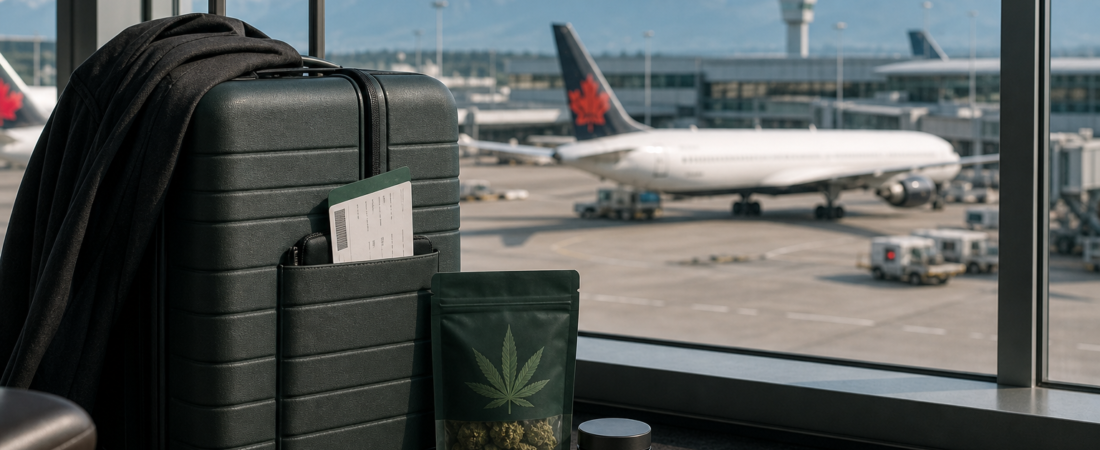
Travelling with cannabis inside Canada is legal for adults, but the rules get messy fast once you move from a simple local purchase to an airport, a hotel, a road trip, or a province with stricter public-consumption rules. A lot of buyers assume legalization means they can toss a pre-roll tin into a backpack and forget about it. That is exactly how people end up making avoidable mistakes.
This guide breaks down the practical side of travelling with weed in Canada in 2026: how much you can carry, what changes when you fly, what to do on road trips, what to watch for in hotels and rentals, and the one line you should never cross under any circumstance.
The short answer
Yes, adults can travel with legal cannabis within Canada if they meet the minimum age in the province or territory they are in and stay within the public possession limit. For most travellers, that means up to 30 grams of dried cannabis or equivalent. But legalization does not erase airline screening rules, provincial consumption differences, impaired-driving laws, or private-property rules.
The biggest mistake is assuming domestic travel rules and border rules are the same. They are not. Once an international border is involved, the answer changes immediately.
The rule that matters most: never cross an international border with cannabis
Whether you are going to the United States, coming back to Canada, boarding a cruise, or taking a connecting flight that crosses a border, do not carry cannabis with you unless you have a rare Health Canada exemption for qualifying prescription-drug situations. Government travel guidance is clear: taking cannabis across the Canadian border is illegal, including products that contain CBD.
That warning applies even if cannabis is legal where you are going. It also applies if you only have a small amount left in a vape cart, edible package, or pocket jar. If a trip has any international component, finish it before you leave, store it at home, or do not buy it in the first place.
How much cannabis can you travel with inside Canada?
For recreational use, the federal public-possession limit is up to 30 grams of dried cannabis or equivalent for adults. That limit is the baseline for travel within Canada, but it does not give you permission to consume anywhere you want.
Equivalent amounts matter because a lot of newer buyers travel with formats other than dried flower. Oils, pre-rolls, edibles, beverages, capsules, and vapes still count toward your legal possession limit. If you are not confident reading the label, review our guide to reading a cannabis menu before you buy before you travel with a mixed stash.
If you are new to legal purchasing in general, our complete guide to buying weed legally in Canada covers packaging, excise stamps, and what a compliant product should look like before it ever goes in your bag.
If you are planning a multi-city route and want one extra comparison layer before choosing where to buy, CannaRadar can be useful for checking how legal cannabis listings are presented across different Canadian markets before you commit to a stop.
Flying with weed inside Canada
Domestic flights inside Canada are where most travellers overthink the wrong part. Security screening is not the same thing as permission to break other laws. CATSA guidance allows cannabis in carry-on and checked baggage for travel within Canada, but that does not mean every product can be packed carelessly.
What is usually fine on a domestic flight
- Dried flower and pre-rolls: Usually straightforward if you stay within the legal limit and keep products sealed and easy to identify.
- Edibles and capsules: Low-friction for travel, especially if you want to avoid smell.
- Vapes: Common, but better handled carefully and kept in original packaging where possible.
- Oils and topicals: Allowed, but liquid rules may apply for recreational products in carry-on baggage.
What travellers get wrong at airport security
Liquid and topical cannabis products are still treated like other liquids, aerosols, and gels in carry-on baggage when they are recreational products. If they are over the standard liquid limit, they can create delays or force you to repack. Medical cannabis oil has different treatment under CATSA guidance, but that is not the same as saying any random recreational oil bottle gets a pass.
The practical play is simple: if you are flying with oils, beverages, or anything liquid, think through baggage type before you leave for the airport. If you are travelling with flower, pre-rolls, gummies, or capsules, the process is usually much cleaner.
Best domestic-flight habits
- Keep cannabis in the original legal package when possible.
- Do not travel with loose, unlabelled products rolling around your bag.
- Keep amounts modest instead of riding the legal maximum for no reason.
- Do not show up smelling like fresh smoke and expect a smooth airport experience.
- Remember that being allowed to pack cannabis does not mean you can consume it in or around the airport.
Road trips: legal to carry does not mean legal to access
Road-trip rules are mostly about common sense and impaired-driving enforcement. If cannabis is in the vehicle, keep it sealed, stored away, and clearly not in active use. Treat it more like alcohol in transit than like a snack in the cup holder.
The worst move is keeping an open jar, active pre-roll, or accessible edible beside the driver. Even when you are not consuming, that kind of setup invites exactly the wrong conversation during a traffic stop. Store products in the trunk or a closed bag away from the front seats whenever possible.
Smart road-trip storage
- Use smell-proof or well-sealed packaging: especially for flower.
- Keep it out of reach: trunk, cargo area, or a closed bag in the back.
- Protect products from heat: parked cars can ruin flower, melt gummies, and degrade vape hardware.
- Do not mix cannabis and driving plans: if you are the driver, treat that as a hard line.
Can you consume in hotels, Airbnbs, and rentals?
This is where legal travellers run into private-property reality. A legal purchase does not override the rules of a hotel, rental building, campsite, or Airbnb. Many travellers assume they can just smoke on a balcony or near a side entrance because they bought the product legally. In practice, property rules matter a lot more than people expect.
Hotels often ban smoking and vaping entirely, even when local outdoor smoking laws are more relaxed. Short-term rentals may also prohibit cannabis use indoors and on the property. If you ignore those rules, the most likely outcome is not criminal trouble. It is a cleaning fee, a complaint, or being told to leave.
If you know you are staying somewhere with strict smoking rules, plan your purchase around that reality. Edibles, capsules, oils, and some low-odour formats are easier travel companions than pungent flower. If you are still figuring out which format fits your comfort level, our THC vs CBD beginner guide is a useful starting point before you buy for a trip.
Provincial differences still matter
Federal legalization gives you the broad frame, but each province and territory still sets some of the practical rules around legal age, where you can consume, and how retail works. That matters when a trip includes multiple stops.
A simple example: public-consumption norms are not identical across Canada. A behaviour that draws little attention in one place may create problems in another. Quebec also remains more restrictive than many travellers expect. That is why the safest habit is to check the province you are entering before you assume your usual routine travels with you.
If your trip includes shopping in a new city, our local guides for places like Montreal, Ottawa, Kingston, Vancouver, and Niagara Falls can help you understand the retail environment before you land.
Why Niagara Falls trips need extra cannabis planning
Niagara Falls trips create a very specific travel mistake: people buy cannabis in a legal Ontario market and then forget that hotel rules, parked-car storage, and possible U.S. border plans can all become part of the same day. That is a different situation from a normal weekend at home, even if the purchase itself feels routine.
If your route includes the falls, a hotel stay, or even the temptation of a quick cross-border detour, read our Niagara Falls cannabis guide before you shop. If the real question is whether a hotel-area handoff, evening attraction schedule, or nearby pickup backup still makes delivery practical, use our Niagara Falls weed delivery guide before checkout. Pair both with the cannabis storage guide so you do not leave flower, pre-rolls, or edibles baking in a car or hotel room while you sightsee.
Why Kingston weekends need extra cannabis discipline
Kingston trips create a different kind of travel mistake. The problem is less about border temptation and more about assuming a quick Ontario weekend means you do not need a storage plan. Students, concert-goers, and short-stay visitors can end up buying before they know the residence, rental, hotel, or smoke-free rules that still control what happens after checkout.
If Kingston is on your route, use our Kingston cannabis guide before you buy. It helps you think through campus-area habits, overnight stays, and whether a simple legal purchase still fits the rest of the evening. Pair it with the cannabis storage guide if the product might spend hours in a bag, hot car, or shared room before you use it.
Why Peterborough and cottage-country routes need a different storage plan
Peterborough trips create a smaller-market version of the same travel problem. Buyers often make a legal stop in town and then head straight toward a cottage, campground, lake day, or shared weekend place without deciding whether the product can stay sealed, cool, and out of reach for the rest of the trip.
If Peterborough is part of your route, use our Peterborough cannabis guide before you shop. It is built around student housing, driving, and cottage-country planning, and it pairs well with the cannabis storage guide when the product may sit in a hot vehicle, shared cabin, or overnight bag before you use it.
If the real question is whether a same-day handoff, pickup backup, or menu that actually explains coverage still fits a Peterborough stop before Lakefield, Bridgenorth, Buckhorn, or a Kawartha overnight, read our Peterborough weed delivery guide before checkout. It breaks down service-area limits, timing promises, and product-detail checks so a quick town stop does not turn into a vague order window plus a much longer carry problem.
Why Pickering and Durham stopovers need a GTA timing plan
Pickering trips create a different travel problem from cottage-country or border-adjacent stops. Buyers are often threading a legal purchase between GO schedules, Highway 401 traffic, Ajax or Scarborough errands, and a same-evening handoff at home, a hotel, or a family stop. That makes timing clarity more important than a flashy menu headline.
If Pickering is part of your route, use our Pickering weed delivery guide before you order. It helps you compare ETA claims, pickup backup, ID handoff expectations, and menu detail so a Durham-region stop does not leave you rushing a delivery window or storing products badly for the rest of the night. Pair it with the cannabis storage guide if the order may sit through traffic, a waterfront stop, or a late drive east.
Why Brantford and Highway 403 stopovers need a route-aware buy plan
Brantford trips can look simple on paper because the city sits right on a familiar Highway 403 path, but that is exactly why buyers get sloppy. A legal stop in Brantford can quickly turn into a longer carry window if the day also includes Hamilton errands, Brant County detours, a hotel check-in, or a late return drive through the 519 corridor.
If your route touches Brantford, use our Brantford weed delivery guide before you order. It helps you compare delivery boundaries, timing promises, pickup backup, and product-card clarity so a highway stop does not leave you juggling a vague order window, heat-sensitive products, or an avoidable extra drive later in the evening.
Why Sudbury and Northern Ontario routes need a longer-window buy plan
Sudbury trips create a different travel problem from quick southern Ontario stopovers. Buyers are often dealing with longer drive windows, lake-country detours, cottage or camp check-ins, shift-based timing, and fewer easy “I will just swing back later” backup options once the evening moves north of the city core. That makes menu clarity, order timing, and heat-safe storage a much bigger part of the decision than people expect.
If your route includes Sudbury, use our Sudbury weed delivery guide before you order. It helps you compare delivery windows, pickup backup, product-card detail, and whether a legal order still fits a longer Highway 17 or cottage-country carry plan. Pair it with the cannabis storage guide if flower, gummies, vapes, or pre-rolls may sit in a warm vehicle, overnight bag, or lakeside rental before you use them.
Why North Bay and Highway 11 stopovers need a longer-window buy plan
North Bay trips create a travel problem that sits somewhere between a quick city errand and a full cottage-country carry plan. Buyers are often balancing Highway 11 timing, lakefront or hotel check-ins, campus-area stops, and longer gaps before they can get products sealed away at home or at a rental. That makes menu clarity, realistic delivery windows, and storage discipline more important than a flashy same-day claim.
If North Bay is on your route, use our North Bay weed delivery guide before you order. It helps you compare ETA promises, pickup backup, product-card detail, and whether a legal order still fits a longer Northern Ontario carry window once the plan includes Highway 11 driving, a waterfront stop, or an overnight stay. Pair it with the cannabis storage guide if flower, pre-rolls, vapes, or edibles may sit in a warm vehicle, overnight bag, or shared cabin before you use them.
Why Cornwall and the Seaway corridor need a simpler travel plan
Cornwall trips create a different kind of cannabis travel mistake. Buyers are often balancing Highway 401 timing, waterfront or hotel plans, student or family visits, and a longer carry window than they expected once the day stretches past one quick in-town stop.
If Cornwall is part of your route, use our Cornwall weed delivery guide before you order. It helps you judge whether a local menu, pickup backup, and same-day promise still make sense once the trip includes storage, a late arrival, or a carry window that keeps getting longer.
What is the easiest format to travel with?
For most adults, the easiest travel formats are the ones that are discreet, stable, and easy to dose. That usually means:
- Capsules or softgels: low smell, simple to pack, consistent dosing.
- Gummies or other edibles: convenient, but only if you respect delayed onset.
- Pre-rolls in sealed tubes: easy for experienced smokers, but smell can still become an issue once opened.
- Low-volume oils: workable, but less convenient in carry-on if you are already juggling other liquids.
The hardest formats to travel with are usually messy DIY containers, half-used jars without labels, sticky homemade edibles, or anything that makes it hard to explain what you have if questions come up.
A better trip plan for beginners
If you are newer to cannabis, travel is not the time to experiment recklessly with a higher-THC product just because you are off your normal schedule. Trips create enough variables already: different sleep, more walking, less hydration, social pressure, and unfamiliar environments. A product that feels manageable at home can hit differently when you are tired, stressed, or rushing between stops.
A cautious beginner travel plan looks like this:
- Buy legally and keep the package.
- Choose a familiar format instead of a novelty purchase.
- Use lower doses than you would for an at-home “fun” experiment.
- Never build consumption into a driving segment.
- Know where you can legally and respectfully consume before you arrive.
If the goal is sleep support while travelling, read our science-backed cannabis sleep guide before relying on an edible or oil in a hotel room for the first time.
Travel-with-cannabis quick checklist
- Domestic only: if the trip crosses an international border, do not bring cannabis.
- Stay under the possession limit: 30 grams dried or equivalent for recreational travel within Canada.
- Keep original packaging: it reduces confusion and shows what the product is.
- Think about format: flower and pre-rolls are simple, liquids need extra care, edibles are discreet but slower.
- Store it properly in cars: sealed, out of reach, and away from heat.
- Check property rules: hotel and rental policies can block smoking or vaping even when the product is legal.
- Do not improvise at airports: pack intentionally and keep products easy to identify.
Frequently asked questions about travelling with weed in Canada
Can you fly with weed on a domestic flight in Canada?
Yes, adults can travel with cannabis on domestic flights within Canada, but they still need to follow possession limits and airport security rules. Recreational liquid and topical products in carry-on baggage are still subject to normal liquid restrictions.
Can you bring weed from Canada into the U.S. if cannabis is legal in the state you are visiting?
No. It is illegal to take cannabis across the Canadian border, including into U.S. states where recreational cannabis is legal.
Should you keep cannabis in the original package while travelling?
Yes. It is not legally required in every situation, but it is the cleanest way to show what the product is, how much you have, and that it came from the legal market.
Can you smoke cannabis in a hotel if cannabis is legal?
Not automatically. Hotels, rentals, and other private properties can still ban smoking and vaping on-site, and many do.
Sources worth checking before a trip
- Health Canada cannabis guidance
- Canada.ca cannabis and border guidance
- CATSA cannabis screening guidance
- Government of Canada travel and cannabis warning
Disclaimer: Cannabis rules can change and property rules vary widely. Always check current provincial and travel guidance before your trip. This article is for general information and reflects the Canadian legal framework in 2026.