
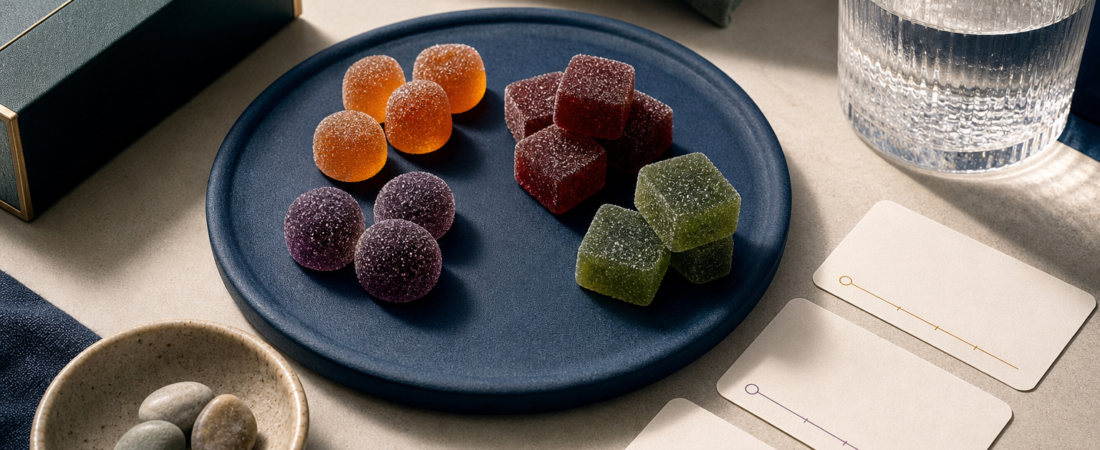
Why gummies deserve their own buying checklist
Gummies look simple, but they create some of the easiest cannabis buying mistakes in Ontario. People often shop by flavour first, ignore the THC-per-piece math, and only notice the fine print after they get home. That is a problem because legal edibles in Canada are capped at 10 mg THC per package, which means the difference between one relaxed evening and a frustrating trial run often comes down to how carefully you read the label before checkout.
Gummies also sit at the intersection of convenience and delayed effects. They are easy to portion, easy to store, and easy to overestimate if you assume a fruit chew will behave like inhaled cannabis. For most buyers, the smart move is to slow down and treat gummies like a format with its own rules: dose discipline, timing patience, ingredient awareness, and realistic expectations about onset.
This guide is built for Ontario readers who want a practical way to compare legal gummies without getting lost in flavour marketing or vague menu descriptions. The goal is not to find the trendiest product name. The goal is to find a gummy format that fits your tolerance, your schedule, and your reason for buying.
Start with the only number that really controls the experience
The most important number on a gummy package is not the brand name, the bright flavour note, or even the total cannabinoids listed in large print. It is the amount of THC or CBD per piece and per package. In Ontario’s legal market, a package can only contain up to 10 mg THC total, but that total may be split across two pieces, four pieces, or ten pieces depending on the product.
That means two packages can both say 10 mg THC and still feel very different in practice. A 10 mg single gummy creates a very different first-time experience than a pack of five 2 mg pieces. The first asks for a bigger commitment at once. The second gives you more control.
If you are new to edibles or you want a calmer, more repeatable routine, piece-based flexibility usually matters more than novelty flavours. A product that lets you take 2 mg, wait, and adjust on another day is usually better than a product that forces one bigger dose decision the moment you open it.
| Gummy label clue | What it tells you before you buy |
|---|---|
| 10 mg THC in 1 piece | Higher commitment per serving; less flexible for cautious beginners |
| 10 mg THC across 5 pieces | Easier to start low and repeat a small dose more consistently |
| CBD listed clearly beside THC | Better for buyers who want a more balanced effect profile |
| Only package total is obvious | Slow down and verify per-piece math before checkout |
Use this quick Ontario gummy snapshot before checkout
If a legal menu or package fails this quick check, keep browsing. Gummies should be one of the easiest cannabis formats to understand before you buy. If they are not, the problem is usually the listing quality, not your ability to read labels.
| Before you buy gummies, check… | Why it matters |
|---|---|
| THC per piece | Helps you choose a realistic first serving instead of guessing from the package total |
| Total pieces in the pack | Shows whether the product gives you flexibility or forces a bigger dose |
| CBD content | Useful if you want a softer, more balanced fit than THC-only products |
| Ingredient and allergen list | Important for sugar preferences, gelatin concerns, and food sensitivities |
| Expected onset timing | Keeps you from re-dosing too early because the format feels too slow |
Choose the format that matches your real-life use case
Not every gummy buyer is solving the same problem. Some want a low-dose evening format that feels easier to portion than a drink. Some want a balanced THC:CBD edible that feels less aggressive than a high-THC option. Others want something discreet for home use without the smell of flower or the hardware decisions that come with vape carts.
That is why the best gummy is not always the strongest or the most hyped. It is the one that matches your actual routine. If you want a small, controlled wind-down option, look for lower per-piece THC and simple piece counts. If you are choosing between THC-dominant and balanced products, start by deciding whether your priority is noticeable intensity or steadier control.
If you are still undecided on the cannabinoid profile, our THC vs CBD for beginners guide helps clarify which direction usually makes more sense before you narrow the edible format itself.
Do not shop gummies by flavour names alone
Gummy branding is designed to feel familiar. Fruit names, candy-style colours, and bright packaging can make one product look interchangeable with another. But flavour tells you almost nothing about how usable the product is. What matters more is whether the listing clearly explains dose, piece count, cannabinoid ratio, and ingredients.
A vague listing is a warning sign. If the menu leads with flavour but buries the actual THC math, you are being asked to fill in details that should already be obvious. That is where a careful menu-reading habit helps. Our cannabis menu-reading guide breaks down how to spot thin product descriptions before you spend money on the wrong format.
When a legal menu is clear, gummies become much easier to compare. You can quickly sort by per-piece dose, total cannabinoids, and whether the product looks better for first-timers, occasional users, or buyers who already know their comfortable edible range.
Know the timing before you decide whether gummies fit tonight
Gummies are convenient, but they are rarely fast. They still move through digestion, which means the onset window can be delayed compared with inhaled formats. That is not a flaw. It just means gummies are a poor fit for impatient decision-making. If you want something that feels predictable, you need enough time in your schedule to wait through onset without stacking more THC too early.
This is why gummies work best when the plan is simple: eat, wait, do not chase the effect, and avoid mixing formats just because the first 30 to 60 minutes feel quiet. If that timing discipline sounds annoying for tonight’s plan, gummies may not be the right fit for this specific session.
If you need a refresher on how edible timing usually behaves, our edibles onset guide explains the onset, peak, and duration pattern in plain language.
Compare gummies with capsules, oils, and beverages the right way
Sometimes the smartest gummy decision is realizing you do not actually want gummies. If your real priority is highly repeatable dose precision with less candy-style packaging, capsules or softgels may fit better. If you want more flexible dose increments and do not mind a measured dropper routine, oils can be easier to fine-tune. If you want a social format but still need to control dose math, beverages may be more intuitive for some buyers.
The key is to compare formats by usability, not trend. Gummies usually win on familiarity and simplicity. Capsules often win on routine and precision. Oils can win on customization. Beverages may feel more casual in social settings. That tradeoff is more useful than debating flavours.
For side-by-side follow-through reading, see our guides on cannabis capsules and softgels in Ontario, cannabis oils in Ontario, and cannabis beverages in Ontario.
Check storage, texture, and package condition before you commit
Edibles are still perishable consumer products. A legal gummy should look professionally sealed, clearly labeled, and easy to store away from heat, kids, and pets. If the package feels vague, damaged, or hard to interpret from the menu, that lowers trust before you even get to dose strategy.
Texture also matters more than people think. Heat exposure, age, and poor storage can change consistency. While legal packaging should help, it is still smart to buy from listings and stores that give you enough product clarity to feel confident before checkout.
After purchase, treat gummies with the same storage discipline you would use for any edible. Our Ontario edibles storage guide covers how to keep them stable and out of the wrong hands once they are home.
Stick to legal Ontario channels and compare listings carefully
Ontario buyers should start with legal sources and menus that make product details easy to verify. That means clear dose math, visible package information, and realistic descriptions of what the gummy contains. If you want a broader legal-listings comparison layer before choosing one edible menu path, CannaRadar can help you see how cannabis listings are presented across Ontario and Canadian markets before you commit to one gummy format or retailer flow.
You should also cross-check general legal and health guidance through the AGCO, the Ontario Cannabis Store, and the federal Cannabis Act framework so you know where product limits, age rules, and legal-market expectations come from.
How to make the final choice without overthinking it
If you are standing on a legal menu deciding between several gummy options, keep the final filter simple. Choose the product with the clearest per-piece dose, the piece count that gives you the amount of control you actually need, and the cannabinoid profile that matches your reason for buying. Ignore the rest unless ingredients or allergies make them relevant.
For most cautious Ontario buyers, the best gummy is the one that removes guesswork. Clear dose math beats louder flavour branding. Lower-friction portioning beats impulse strength chasing. A boring but readable package is often a smarter purchase than a more exciting product with weaker listing details.
That mindset keeps gummies useful for what they should be: a controlled edible format, not a surprise.