
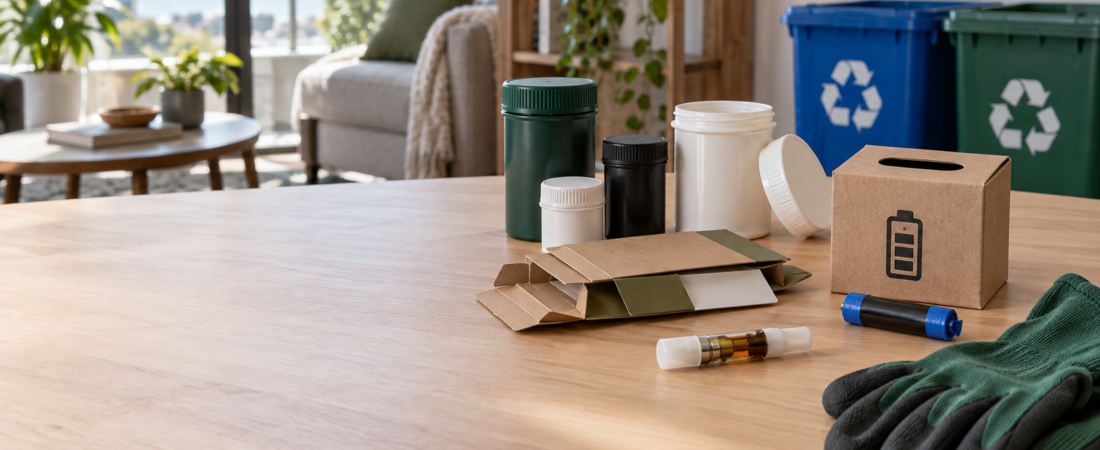
Finished cannabis packaging can look like ordinary household waste, but one bin is not the right answer for every item. A paper sleeve, rigid plastic jar, foil pouch, disposable vape, cartridge, and damaged battery all need different handling. Local recycling rules also vary across Canada, so a symbol on the package is not proof that your municipal program accepts it.
The safest routine is simple: make the item empty, keep any remaining cannabis away from children and pets, separate removable parts only when that can be done without puncturing or breaking them, and use a verified local collection stream. Vapes and batteries deserve special care because they can start fires when crushed in garbage or recycling equipment.
- Confirm the package is empty and close it again.
- Keep leftover cannabis in its labelled, child-resistant container until it can be handled safely.
- Separate clean paper or cardboard only if your local program accepts it.
- Set aside vapes, cartridges, and batteries for an approved collection location.
- Check your municipality or depot before placing mixed materials at the curb.
If a local search result is unclear or a depot rejects the item, do not force it into curbside recycling. Keep the device intact, tape exposed battery terminals only if the collection program instructs you to, and contact your municipality, provincial recycling program, or the device maker for the correct stream. Never crush, open, or place a rechargeable vape or loose battery in household garbage.
Quick choice: accepted by a verified program → follow that program’s preparation rules; not accepted or uncertain → keep it separate and ask for the next approved option.
Start by making the package genuinely empty
Do not rinse cannabis, oil, or concentrate into a sink or toilet. If usable product remains, keep it secured in the original labelled package while you decide what to do. That preserves the product information and reduces the chance that a child, pet, visitor, or waste worker encounters unidentified cannabis.
For a finished dry-product container, remove loose residue without creating dust or scattering plant material. Close the empty container while it waits for disposal. If the package held an oil, edible, concentrate, or topical and residue remains, follow local household-waste guidance rather than assuming a rinse makes every component recyclable.
Our guide to reading Canadian cannabis labels explains which package details are worth checking before the container leaves your home.
Why cannabis packages are difficult to sort
Legal cannabis packaging is designed to protect the product, carry required information, and resist access by children. Those goals can produce containers made from several materials: rigid plastic with a foam liner, a paper box around a plastic tray, a multilayer pouch, or a glass jar with a mixed-material lid. A package can look recyclable while still being incompatible with a local sorting facility.
The federal government sets requirements for cannabis packaging and labelling, but collection is handled through provincial, territorial, municipal, or private programs. Health Canada’s consumer guide to cannabis product labels helps explain the information and warning features found on legal packages. Your local waste authority remains the better source for the bin or depot decision.
| Item | First check | Safer default when uncertain |
|---|---|---|
| Paper box or insert | Is it clean, dry, and accepted locally? | Keep it out of recycling until confirmed |
| Rigid plastic jar or tube | Does the local list accept that shape and resin? | Leave the mixed lid attached unless instructed otherwise |
| Flexible or foil-lined pouch | Is there a verified film or take-back stream? | Do not place it in curbside recycling by guess |
| Cartridge, disposable vape, or battery | Which approved depot accepts the exact device? | Store safely and take it to a battery or e-waste collection point |
Paper and cardboard: clean and dry is only the first test
Outer boxes and paper inserts are often the easiest pieces to evaluate. Remove non-paper components only when they separate cleanly, flatten the cardboard if your local program requests it, and keep wet, oily, or heavily contaminated fibre out of paper recycling.
Do not shred labels merely to hide routine product information; very small paper pieces can be harder for sorting systems to recover. If privacy is the concern, remove or obscure your own delivery label or receipt details before disposal. The regulated product label itself normally describes the product, not your identity.
Rigid jars, tubes, lids, and pouches
Check the accepted-items list published by your municipality or recycling program. The number inside a recycling symbol identifies a plastic resin; it does not guarantee local acceptance. Size, colour, shape, liners, seals, and mixed materials can all affect whether the item can be sorted and sold.
Avoid “wish-cycling”—putting an uncertain item in the blue bin and hoping it will be recovered. An incorrect item can contaminate a load or create extra work at a facility. If your community offers a retailer or producer take-back program, read what it accepts before making a trip. Do not assume every cannabis store participates or that one program takes all brands and package types.
Reducing waste starts before disposal. Comparing formats and buying only an amount you can store and use responsibly may prevent unnecessary packages and expired product. Our cannabis shopping-on-a-budget guide focuses on value without overbuying.
Vape cartridges and disposable devices need a separate path
Never put a cannabis vape, disposable device, or lithium battery loose in curbside garbage or recycling unless your local authority explicitly provides that route. Collection trucks and sorting equipment can crush batteries, causing heat, sparks, or fires. A device that appears empty may still contain a battery or oil residue.
Do not puncture, crush, burn, dismantle, or soak a vape. Do not try to pry out a built-in battery unless the manufacturer and collection program provide safe instructions for that exact design. Keep the device away from heat, metal objects, children, and pets while arranging drop-off.
For battery collection options, use a verified locator such as Call2Recycle Canada’s drop-off locator, then contact the location if the device is unusual or contains a non-removable battery. Municipal hazardous-waste or electronics depots may have different acceptance rules for cartridges, disposable vapes, and batteries.
- Yes, after local confirmation: clean, dry paper or a single-material container your program specifically accepts.
- Pause and check: a pouch, a mixed-material lid, a container with residue, or anything that only looks recyclable.
- Never curbside by default: a cartridge, disposable vape, loose battery, or device with a built-in battery. Keep it secure and use an approved collection point.
When a device is damaged, hot, swollen, leaking, hissing, or smoking, do not transport it as ordinary recycling; follow emergency or local hazardous-waste guidance.
What to do with a damaged or hot battery
A swollen, leaking, punctured, hissing, unusually hot, or smoking device is not a routine recycling item. Move away from it and avoid touching leaking material. If there is immediate fire or injury risk, call emergency services. Follow local fire-department or hazardous-waste guidance rather than transporting an unstable device in a pocket, bag, or vehicle.
For an undamaged removable battery being stored for normal drop-off, prevent its terminals from contacting metal by following the collection program’s instructions, which may include taping exposed terminals. Do not improvise a container that traps heat around a damaged battery.
Keep cannabis residue away from children and pets
Empty packaging can still smell like cannabis or contain residue. Store it out of sight and reach until disposal day. Do not leave a used cartridge, gummy wrapper, oil bottle, or open package on a counter or in an accessible bin. A household pet or child cannot judge whether the remaining amount is dangerous.
If accidental exposure may have occurred, treat it as a health issue rather than a cleanup problem. Our guides to cannabis safety around children and cannabis and pets explain the information to gather and when to seek urgent help.
Build a repeatable home routine
Use a small, clearly designated holding area that children and pets cannot access. Keep clean paper separate from uncertain mixed packaging, and keep batteries or devices away from loose metal. Once a month, check the current municipal list and take accepted special-waste items to the appropriate depot.
If you use delivery, remove or obscure personal address details before recycling the outer mailer. Keep the product label until the package is empty and any quality, recall, or return question is resolved. This is especially useful when products have similar names or when more than one lot is in the home.
- Confirm that the location accepts the exact item—not just “batteries” or “electronics” generally.
- Check current hours, quantity limits, and whether staff require batteries or devices to be prepared in a specific way.
- Keep the intact item separate from keys, coins, and other metal during transport, and do not leave it in a hot or freezing vehicle.
If a device is swollen, leaking, hot, hissing, or damaged, stop: call the depot or local hazardous-waste program for instructions instead of carrying it in as routine recycling.
Bottom line
Cannabis packaging is not one waste category. Empty and secure the package, protect personal information, verify local rules for paper and plastic, and keep vapes and batteries out of ordinary bins until an approved collection point accepts them. When the material mix is unclear, checking first is better than contaminating recycling or creating a battery-fire risk.
A two-minute sort at home can make disposal safer for your household, collection workers, and recycling facilities—and it helps you notice which products create the most packaging before your next purchase.
- Separate the stream: keep batteries, cartridges, and disposable vapes out of curbside recycling and household garbage unless your local program specifically accepts them.
- Protect the terminals: place loose batteries in a small non-metal container and cover exposed terminals with non-conductive tape before transport.
- Confirm the destination: check the municipality, retailer take-back program, or household-hazardous-waste depot before making the trip; program rules can change by location.
If a device is hot, swollen, leaking, damaged, or smoking, do not transport it in an enclosed vehicle. Move away from people and flammable materials if it is safe to do so, and contact local emergency services or the relevant waste authority for instructions.