
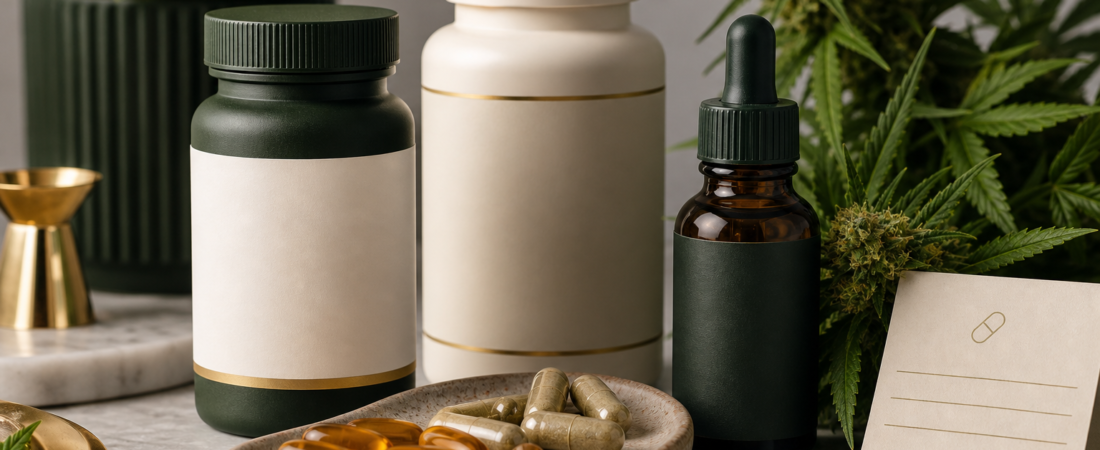
Cannabis capsules and softgels can look simple from the outside, but they are one of the easiest formats to misuse if you buy them like they are ordinary vitamins. In Ontario, these products appeal to people who want cleaner dose control, less smell, and a format that feels more routine than smoking or vaping. That convenience is real, but only if you know what to check before you buy.
The biggest mistake is assuming every capsule product behaves the same way. Some are THC-heavy, some are CBD-first, some use balanced ratios, and some rely on carrier oils that change how the product fits your routine. A capsule that looks low-key on the shelf can still be a poor fit if the dose per unit is too high, the ratio is wrong, or the label is too vague to help you plan timing.
This guide breaks down how to choose cannabis capsules and softgels in Ontario with a practical buyer lens: dose per capsule, THC versus CBD intent, onset timing, ingredient clarity, and the safety checks that matter before checkout. If you want a format that feels discreet and repeatable, capsules can work well. The key is buying them like a measured cannabis product, not like an afterthought.
Why capsules and softgels appeal to Ontario buyers
For many shoppers, capsules solve three common problems at once: they are discreet, they are pre-measured, and they remove the guesswork of pouring oil from a dropper. That makes them attractive to beginners, low-dose routine users, travelers moving within legal Canadian rules, and anyone who wants more predictable storage and handling.
They also fit buyers who do not enjoy inhalation formats or sugary edible products. A capsule can feel more neutral than a gummy, beverage, or vape cart, especially if your goal is consistency rather than a fast social effect. But that same “neutral” presentation can hide important differences in potency and expected timing.
| Buyer question | What to check on capsules or softgels | Why it matters |
|---|---|---|
| How strong is each unit? | THC and CBD per capsule | Prevents accidental overbuying when one softgel is stronger than your routine |
| What is the intended effect? | THC-only, CBD-only, or balanced ratio | Helps match the product to relaxation, symptom support, or lighter daytime use |
| How long will it take? | Format notes and edible-style timing expectations | Capsules often act more like ingested cannabis than inhaled cannabis |
| What is inside besides cannabinoids? | Carrier oil and ingredient list | Useful for dietary fit, tolerance, and repeat buying confidence |
Capsules vs softgels: what is the real difference?
Many Ontario menus use the words capsules and softgels almost interchangeably, but there can be useful differences. Softgels often contain cannabis oil in a sealed gel shell, while capsules may contain oil or another prepared fill inside a harder capsule body. In practice, what matters more than the marketing term is the dose format, cannabinoid ratio, and the clarity of the label.
That means you should not shop by the product name alone. Two products can both be called capsules while offering very different experiences. One may be a low-dose CBD-forward daytime product, and another may be a stronger THC evening option. The menu card should make those differences obvious before you ever add the item to cart.
Start with dose per capsule, not total package hype
The single most important number on a capsules or softgels listing is the dose per unit. Total THC in the package matters for budgeting, but it does not tell you whether one capsule fits your plan. If a product contains ten capsules, what matters first is whether each one is 2.5 mg THC, 5 mg, 10 mg, or something more specialized.
That per-unit number is what lets you build a repeatable routine. If one capsule is already at the high end of what you can comfortably handle, the package is not beginner friendly just because it comes in a small bottle. Good menus make the per-capsule dose easy to spot. Weak menus bury that detail under general marketing language.
| If your goal is… | Usually safer capsule profile to start with | Watch-out |
|---|---|---|
| Very cautious first try | Low-dose THC or CBD-dominant product with clear per-unit labeling | Do not assume “wellness” branding means low psychoactivity |
| Non-intoxicating support focus | CBD-forward or balanced-low-THC product | Check that THC is still low enough for your comfort |
| Simple evening routine | Clearly labeled THC dose with predictable unit count | Stronger capsules can be hard to scale down if one unit is already too much |
| Travel-within-Canada planning or storage simplicity | Sealed bottle with obvious ratio and dose info | Do not confuse convenience with faster onset |
THC, CBD, and balanced ratios all serve different buyers
Capsules are not one category in effect terms. THC-dominant products are usually the choice for buyers who already know they want noticeable psychoactive impact. CBD-dominant products are more common for shoppers focused on non-intoxicating support or a gentler routine. Balanced products sit in the middle and can make more sense for people who want some THC presence without going all-in on potency.
If you still feel unsure about how those cannabinoids fit different routines, our THC vs CBD beginner guide is the best next read before buying a bottle. Ratio fit matters more here than flashy naming. Capsules are built around repeat use, so the wrong ratio can become an annoying repeat purchase fast.
Onset timing: capsules usually reward patience
One reason some buyers love capsules is that they feel structured. One reason some buyers hate them is that they expect fast feedback and do not get it. Capsules usually behave more like ingested cannabis than inhaled cannabis, so the timing can be slower and more gradual than smoking or vaping. That makes them a poor fit if your real goal is an immediate effect.
For that reason, capsules pair best with routines where you can wait, measure, and avoid stacking doses too quickly. If you need a refresher on edible-style timing and why people often overshoot by re-dosing too fast, read our guide on how long weed edibles take to kick in. The pacing logic overlaps more than many first-time capsule buyers expect.
Ingredient and carrier-oil checks still matter
Good capsule shopping is not only about cannabinoids. It is also about what carries them. Many products use oils such as MCT or other fat-based carriers, and the ingredient list can matter if you are trying to keep your routine simple, avoid certain ingredients, or compare one producer’s clarity against another’s.
If the menu gives you no useful ingredient information and the package description feels thin, that is not a great sign. Legal cannabis products should make it reasonably easy to understand what you are buying. You do not need a giant ingredient essay, but you do need enough detail to feel confident that the product is consistent and professionally presented.
How to compare capsule listings without guessing
The best capsule listings make four things easy to compare: dose per unit, ratio, package count, and ingredient or carrier context. If you are jumping between several legal menu pages, keep the same comparison discipline every time. A service like CannaRadar can be useful if you want a broader look at how legal cannabis listings are presented across Ontario and Canadian markets before you commit to one capsule format or retailer flow.
You should also compare the listing style against the standards in our cannabis menu-reading guide. If a product card makes you guess at dose, effect direction, or pack structure, it is not doing enough work for the buyer. Clear menu language reduces bad decisions.
When oils may be a better fit than capsules
Capsules are great for routine and convenience, but they are not always the best fit. If you want flexible titration, an oil may still work better because you can adjust the amount more gradually than a fixed-dose capsule allows. That tradeoff matters most for cautious beginners and people who want to move in smaller increments.
If that sounds closer to your goal, compare this guide with our Ontario oils breakdown: How to Choose Cannabis Oils in Ontario. The right question is not “Which format is better?” but “Which format gives me the most control for the way I actually use cannabis?”
Red flags before checkout
- Per-capsule THC is unclear or buried inside total-pack math
- The ratio between THC and CBD is missing or vague
- The menu leans on lifestyle wording without practical dose guidance
- Ingredient details are thin enough that repeat buying feels risky
- You are choosing capsules for speed when your real need is quicker onset
Bottom line
Cannabis capsules and softgels can be one of the cleanest formats to buy in Ontario when the product card is honest, the dose per unit is clear, and the ratio matches your real goal. They work best for shoppers who care about discretion, routine, and repeatability more than speed.
Buy them with the same care you would use for any ingested cannabis product: check the per-unit dose first, compare THC and CBD intent, respect slower timing, and avoid vague listings that leave too much to guesswork. When those basics are in place, capsules can be one of the easiest formats to keep consistent.